🏛️ Property History • Genealogy • Historical Investigation
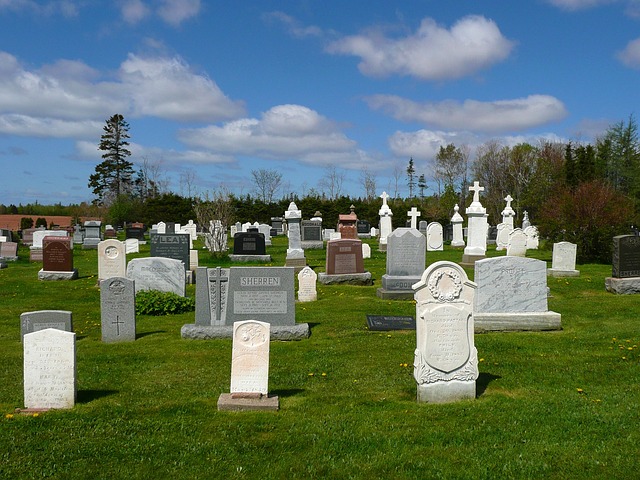
As a genealogist, I find that most online research leads to more questions than answers. Like most, I utilize Ancestry and Family Search for the wealth of information these databases hold. For me, these are surface-level facts and numbers. By themselves, they do not tell the story of an ancestor. Their value comes in providing data that often leads to enough evidence to be considered proof. At the age of ten, my aunt took my to graveyards as she conducted family research. I learned an early lesson that gravestones contribute to research for genealogical evidence.
These databases utilize another database called Find a Grave. If a family story says that Great Grandma died in 1900, a gravestone can be the source useful to confirming this information. Often, a hint (popular on Ancestry) from Find a Grave will allow one to see a picture of the gravestone. However, it would be best to remember that gravestones are both primary and derivative sources, not evidence. The validity of the date on the tombstone depends on the informant and their knowledge of the event. The person providing the date of death was probably there at the time. However, if the person who died was in their 80s, we can assume the informant was not at the decedent’s birth. Therefore, the date of birth has to be verified.
SOURCES provide INFORMATION from which we select EVIDENCE for ANALYSIS. A sound CONCLUSION may then be considered “PROOF.”
Find a Grave does not include enough source citations to make a case for proof, but it can be a good place to start. What are some things that it does provide?
We can google search the cemetery to find an affiliated church. Church records may have original source documents regarding the birth and death. If the gravestone has a spouse listed, we can look for marriage records. Furthermore, a death certificate, an original source with possible derivative information, must be found.
Key Steps for Using Gravestones in Research:
Is a gravestone evidence by itself? No, it is a source that can lead us to information. However, this is where the real fun in research begins. We have a starting point to start building this person’s life. It is hard to imagine that a person’s final resting place can help us start telling their story.
Q: Are gravestones considered evidence in genealogy?
A: Gravestones are sources that provide information. Their validity depends on the informant’s knowledge and must be corroborated with other records.
What clues have you discovered from gravestones in your research? Share your stories in the comments!
Source:
Elizabeth Shown Mills, Evidence Explained, Citing History Sources from Artifacts to Cyberspace, 3d ed., digital ed. (Baltimore, Maryland, Genealogical Publishing Company, Inc., 2012), 3.
Ready to uncover your own family’s story? Visit my Contact Me Page
© 2025 PennsStory Genealogy All Rights Reserved Kimberly Chaffee
We use cookies to improve your experience on our site. By using our site, you consent to cookies.
Manage your cookie preferences below:
Essential cookies enable basic functions and are necessary for the proper function of the website.
These cookies are needed for adding comments on this website.
Statistics cookies collect information anonymously. This information helps us understand how visitors use our website.
Google Analytics is a powerful tool that tracks and analyzes website traffic for informed marketing decisions.
Service URL: policies.google.com (opens in a new window)
SourceBuster is used by WooCommerce for order attribution based on user source.