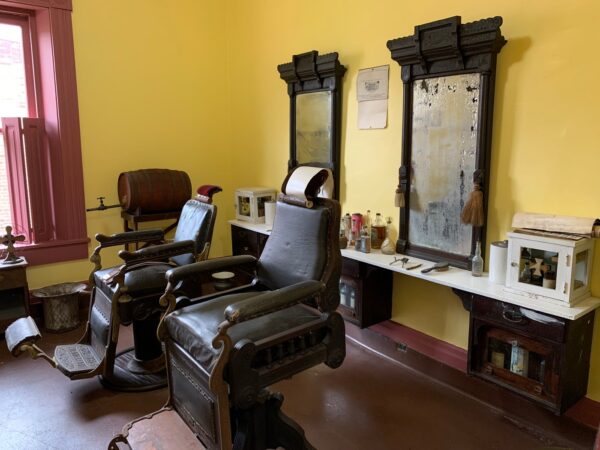
Some people disappear from history quietly, like Benjamin Roseberry. A late-night investigation inside the Greene County Historical Society unexpectedly brought one of those people back into memory. The story of Benjamin Roseberry is one that deserves to be told. The Legacy of Benjamin Roseberry On the night of Aug. 16, 2025, members of Steel City Ghost Hunters and I were sitting in the doctor’s office across from the barber shop on the second floor of the Greene County Historical Society. We were laughing about the television show Resident Alien when the tripwire in the hallway suddenly lit up. Joking that perhaps someone nearby enjoyed the same shows, Kim from Steel City turned on her vox device and began asking questions. A voice came through clearly: “Ben.” When we responded and asked for clarification, the voice answered again: “Benson.” Moments later, the cat balls inside the barber shop lit up. Kim decided to stop the session and asked us to walk around and look for the name Benson on any of the portraits hanging on the upper floor in that wing. We did not find anything until we went into the barber shop and noticed the barber’s licenses hanging on the wall. The one license was for B. C. Roseberry. Ashley, another member of Steel City, quickly googled the name Benson Roseberry, and it returned Ben Roseberry, Barber of Rice’s Landing, PA. This is where our story begins. Rice’s Landing is a small, rural river town nestled on the western bank of the Monongahela River, approximately 50 miles (80 km) south of Pittsburgh. Fueled by valuable resources such as coal, clay, and timber and benefiting from river transportation, the town became a boomtown. Shops, taverns, and trading posts once filled its streets, earning it the reputation among frontier settlers as the “Gateway to Western Pennsylvania.” (Wikipedia, 2026) To learn more about Benson Roseberry of Rice’s Landing, I started with the 1930 census records. What I found changed what I thought we had discovered that night at the museum. The record revealed that 68-year-old Benjamin Roseberry (b. 1862), a barber, lived on Main Street with his wife, Aura, age 56, and son, Purl, age 36. It states on the record that he owns his barber shop. However, looking back at the 1920 Census, we find that he is using the initials B.C. instead of Benjamin. I know I have the right person because his wife and son match the 1930 record. Now the question becomes, what is the “C” in his name? Through years of research, I have found that many times middle initials, and sometimes first names, are linked to the mother’s maiden name. In this case, it appears that indeed Benjamin carried the family name Craft, his mother’s maiden name. According to Find A Grave, his father was Elijah Michael Roseberry, and his mother was Harriet Jane Craft Roseberry. Now that I know that his name is not Benson, but Benjamin, it was time to learn more about Barbers and Rice’s Landing. Why? Because I was curious, this particular place still seemed connected to him. Pulling the 1925 Sanborn Fire Insurance maps (see above), I found Benjamin’s barber shop standing along Main Street. This can also be confirmed by the census, which shows Benjamin Roseberry and his family live on Main Street. I would surmise that he lived above the shop. I am not sure what year Benjamin opened his Barber shop. Census records indicate that he was a barber in 1910. From 1899 to 1901, or possibly later, he held a civil service job on the “Slackwater,” a repair boat. Rice’s Landing was home to Lock and Dam No. 6 on the Monongahela River navigation system. As a civil service employee on the Slackwater repair boat, Benjamin Roseberry would routinely dock at Rice’s Landing to perform heavy maintenance on Lock 6. (Slackwater, 2026) This information lines up with the 1900 census; he was a skilled laborer. One detail continued drawing my attention: the aging barber’s license still hanging on the wall inside the museum shop. When did he get his license? A quick web search found the following information. “Pennsylvania began formally issuing barber licenses following the passage of the Barbers’ License Law on June 19, 1931. The 1931 act was established to promote public health and safety, regulating barber schools, shops, and the profession through examination and licensure.” Barber shops in small towns and rural areas served as informal meeting places where men gathered to talk about local news, politics, farming, and personal matters. In many rural counties, men’s conversations often centered on agriculture, road conditions, government policies, and regional developments. These spaces fostered a sense of belonging and enabled the exchange of information vital to isolated communities. It is easy to imagine Benjamin Roseberry spending much of his life inside the barber shop, visiting with friends and serving as part of the community’s daily rhythm. Rice’s Landing never had a population of more than 1,000 people. It was a very small community. Whether the voice that answered us that evening truly belonged to Benjamin Roseberry is impossible to know. What remains undeniable, however, is that for a brief moment inside an old barber shop in Greene County, a man nearly forgotten by history was remembered again. Sources Many thanks to Greene County Historical Society and Steel City Ghost Hunters for their accommodation and help in the investigation.
Tracing the Ross House in Bellaire, Ohio Through Deed and Census Records
Historic homes often hold stories that are not immediately visible. The Ross House in Bellaire, Ohio is one such property. At first glance, it appears to be simply another nineteenth-century residence. However, the records connected to the house reveal a much deeper history. Two types of sources are especially valuable when researching a property like this: deed records and census records. Together, these documents allow researchers to trace ownership, identify the families who lived there, and understand how the house fit into the community over time. By following the paper trail left behind in Belmont County records, it becomes possible to reconstruct the story of the Ross House and the people connected to it. What The Ross House Deed Records Tell Us Deed records tell us who owned the Ross house (chain of title) through the years and when ownership changed. Below is a list of deed owners based on records from Belmont County, Ohio. We can learn from these records who held the property at 2011 Belmont St. However, there is another source to tell us who these people were and what jobs they had. More importantly, we can discover who resided in the house before 1936. The house was built sometime after 1899, and we know this because it appears on the Sanborn Maps in June of 1900 as 2009 1/2. Sanborn Fire Map 1900 Bellaire Ohio By 1915, the house had been renumbered to 2011 Belmont Street. Census Records As we delve deeper into the history of the Ross House, the census records provide a vivid glimpse into the lives of its inhabitants. Each entry reveals the occupations and family dynamics of those who called this house home, painting a picture of resilience and community. From the early 1900s, we find skilled laborers and budding entrepreneurs. Their stories are intertwined with the growth of Bellaire itself. This narrative, woven together by both deed and census records, brings the Ross House to life, transforming it from a mere structure into a vessel of rich personal histories and local heritage. Ora Weeks and Frank Fralinger were married in 1892, resulting in the birth of twin sons, John Keith and Jacob Kenneth Fralinger. However, the 1900 census indicates that Ora had relocated and married Harry Weeks, a glassblower residing in Bellaire. In the census, the boys were listed by their middle names rather than their first names. We also learn from the census that John, Mary, and Minnie Lafferty ages 57, 58, and 32 are living in the Ross house. This family includes the parents of Ora and her sister Minnie. The Lafferty family played a crucial role in the early social fabric of Bellaire. They contributed to community events and local gatherings. As the years progressed, the house became a gathering place for relatives and friends, echoing with laughter and stories of times gone by. The changing dynamics of the household reflected broader trends of the era, including shifts in economic opportunities and family structures. Neighbors would often drop by, creating a sense of camaraderie that defined the tight-knit community. Eventually, Harry and Ora sold the house to John Keith, Ora’s son, and they left for California. He owned the house for about a year before selling it. Chinchilla Fur Business The home served as a business for a time, raising chinchillas that Marie Getrost and her husband Frederick sold for the fur industry. They were kept in an upstairs room. Frederick’s draft card for World War II indicates that he was a fire truck driver. They did not move into the Ross house until 1948. For a period, the residence served as a business where Marie Getrost and her husband Frederick bred and sold chinchillas for the fur trade. The animals were housed in an upstairs room. Frederick’s draft card from World War II indicates that he worked as a fire truck driver. The couple did not relocate to the Ross house until 1948. After settling in, the Getrosts expanded their chinchilla business, attracting interest from fur traders across the region. They built a reputation for producing high-quality pelts, establishing a loyal customer base. As the fur industry’s popularity grew, so did their operation, leading to renovations in the home to accommodate more chinchillas. However, by the late 1950s, shifting attitudes toward fur and animal rights began to impact their business. Eventually, the Getrosts decided to close the chinchilla breeding operation and repurpose the space for family use. The home was later bought in 1990 by Charles Ross, whose family owned the furniture store next to the house. Before the home was opened for paranormal tours and investigations, it was used for entertainment purposes featuring escape rooms.
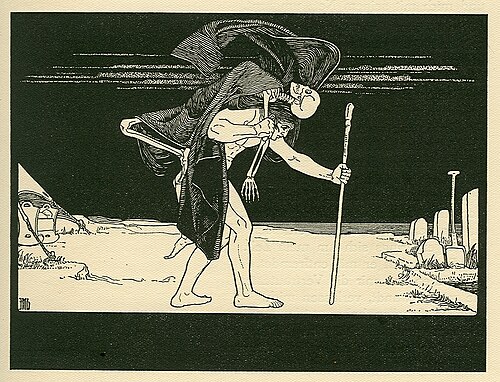
Between Worlds: The Historical Roots of the Dybbuk
Exploring the Jewish tradition of the dybbuk reveals a deep narrative of spirit possession that goes beyond folklore. Originating from ancient texts, this concept highlights unresolved moral issues and the fate of the soul. As we examine the dybbuk’s history, we see its evolution from mystical teachings to popular culture, notably in An-sky’s play. Join us to discover how the dybbuk not only frightens but also reflects our deepest fears about unfinished lives and the consequences of our actions.
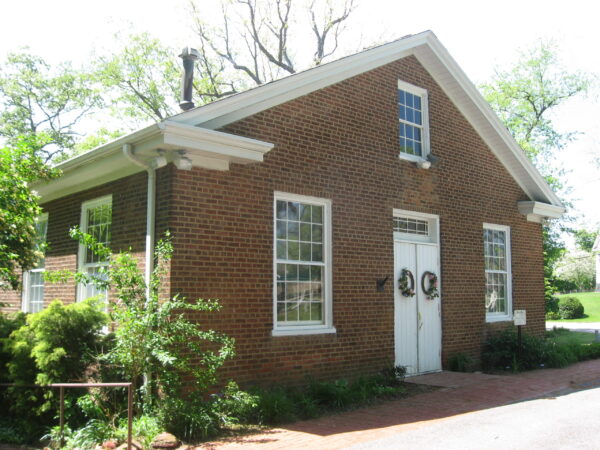
🕯️When the Cloaked Man Appeared: A Strange Kindness in Talley Cavey
Every old village has its secrets, but few are as chilling as the Talley Cavey Ghost Story. This is one of the many haunting tales whispered through generations in Western Pennsylvania. The Talley Cavey Ghost Story is known for its eerie vibes and mysterious happenings. After the end of the Revolutionary War, the western part of Pennsylvania remained largely unsettled. As pioneers pushed west over the Appalachian Mountains, small communities began to form in the Pittsburgh region. One such early settlement was Talley Cavey, located along what is now Route 8. The area once featured a general store, a post office, and a turnpike. Today, the Depreciation Lands Museum sits on part of that historic land, preserving the memory of the region’s early days. Below is one Talley Cavey ghost story that would later become the first of many. The Church That Time Tried to Erase In 1830, a group of Covenanters built a modest church on the site, accompanied by a graveyard. The cemetery became the resting place for generations of local families, from soldiers to pioneers, and many children. By the 1970s, the church had been abandoned and left to deteriorate. That is, until a group of passionate residents came together to save it. They formed the Hampton Historical Society, dedicating themselves to restoring the church and its surrounding structures, including a small annex and barn. Whispers in the Chapel As restoration began, volunteers began reporting curious phenomena. Tools moved. Doors creaked open on their own. But nothing felt threatening; in fact, quite the opposite. A presence was felt. Warm. Helpful. Watchful. They called him: The Deacon. One Volunteer’s Chilling Encounter “It was a quiet Saturday afternoon, and most of the volunteers had already left for the day…” What follows is a first-hand account from one of the original volunteers at the church. Her experience became the first of many Tally Cavey ghosts stories about The Deacon, and it still gives us chills. The Man in the Cloak “The weather was warm, as it was still late summer, not quite fall. I was working near the front window, trying to replace a damaged sill. It wasn’t going well. The wood was too thick, and I had been trimming it carefully with my penknife for some time. I suddenly felt I wasn’t alone. I turned and there, standing in the doorway, was a man. Not very tall, dressed in a long black cloak and a wide-brimmed hat. He smiled at me, but said nothing. I said, ‘Hello,’ but he didn’t respond. Thinking nothing of it, I turned back to the window and muttered, ‘Well, instead of just standing there, why don’t you give me a hand?’ When I looked back, he was gone. I hadn’t heard him leave. Hadn’t heard him come in. Just… gone.” A Little Help from the Beyond? “I picked up the sill and tried again. To my complete astonishment, it slid into place perfectly. Better than I could have managed myself. I whispered, ‘Thank you,’ not sure if I was thanking the ghost or just my lucky stars. But I couldn’t shake the feeling I’d just been helped. Helped by someone who had once stood in that same church, maybe centuries ago.” Who Was The Deacon? The woman later speculated that the man might have been a former preacher or caretaker, someone tied closely to the church in life, who never truly left it. Whether he was a preacher, a parishioner, or a quiet soul who loved the place, one thing is clear: he meant no harm. Legacy of a Benevolent Spirit The Talley Cavey ghost story marked the first of many reports about The Deacon. Volunteers recounted strange, helpful occurrences, a ladder held steady, a stuck window suddenly opening, or a comforting presence when alone. He wasn’t feared. He was welcomed. “Whether it was the spirit of a long-forgotten churchman or simply a trick of the imagination, one thing is certain: Talley Cavey holds stories that refuse to be buried.” Have You Encountered The Deacon? In conclusion, the Talley Cavey Ghost Story is more than just a legend; it is a connection to our past. Have you visited the Talley Cavey church or the Depreciation Lands Museum? Have you heard this Talley Cavey ghost story? Have your own ghost story to share? Drop it in the comments or email us at Kimberly@pennstory.com You might be featured in a future post! Follow us on Instagram @PennStoryParanormal Subscribe to get updates on our next haunted story! Join the conversation and share your insights on the Talley Cavey Ghost Story.
Chilling Chronicles of the Cursed Bloodline
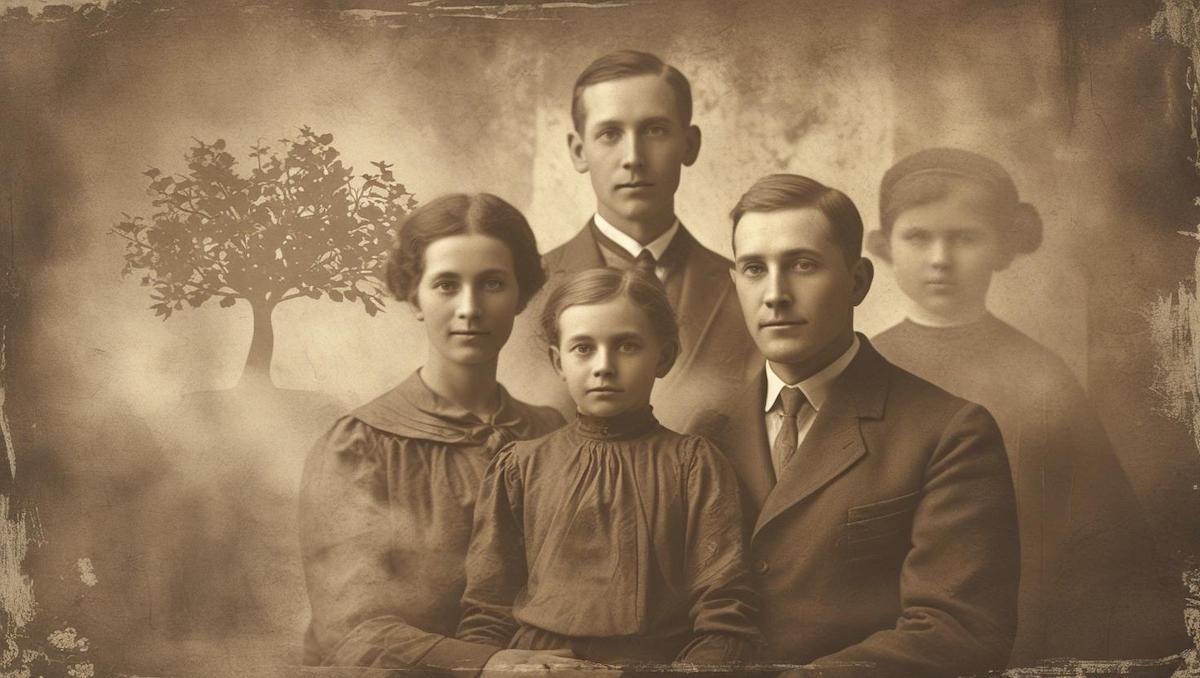
Chilling Chronicles of the Cursed Bloodline Some spirits don’t haunt houses; they haunt names, memories, and heirlooms. They linger in lullabies passed down, in dreams that repeat, in patterns that seem to skip generations but never truly vanish. This is often a sign of a cursed bloodline. In my work as a genealogist and haunted history researcher, I’ve come to believe that some hauntings run deeper than cold spots and creaking floors. These are the hauntings of the bloodline where family stories, griefs, and unresolved legacies echo across generations. Such occurrences suggest the presence of a cursed bloodline. What Is a Cursed Bloodline? Folklorists have long told tales of cursed families or “bad blood,” but this isn’t always about evil. Sometimes it’s about unfinished business, collective memory, or the deep imprint of trauma. A haunted bloodline may look like: – A family where tragedy repeats (think “all the women in our line died young”) – Dreams passed from grandparent to grandchild – Family heirlooms associated with strange energy – Unspoken stories that demand to be told In the Appalachian mountains, this might be described as “haints in the holler.” Further, in Celtic tradition, it’s the banshee who wails before a death in the family. In African diasporic spirituality, it’s common to recognize ancestral spirits that walk with you. However, these traditions may sound different, but they all recognize the same thing: some spirits are considered family members and may point to a cursed bloodline. Why It Shows Up in Genealogy Work As a genealogist, I often trace lines through dusty deeds and church records. Sometimes, its the silence between the records that speak the loudest. This silence is like the hidden whispers of a cursed bloodline. A few years ago, I was researching a family whose women had all lost children at the same age. The records offered no apparent reason, but in the oral histories, there was a whispered story of a grandmother who had been “cursed” after defying her preacher husband. Coincidence? Maybe. However, when the family acknowledged her story, the pattern broke. I’ve come to trust that our ancestors want their stories told, especially the ones who were silenced. Recognizing a cursed bloodline may be the first step to healing. The Science Behind the Ghosts? Modern research is catching up with folklore. Psychologist Rachel Yehuda has studied how trauma, particularly from war and persecution, can be passed down genetically through epigenetic markers. As a result, this may mean that the fear or grief your ancestor felt may still be reflected in your DNA. Family constellations therapy (a method developed by Bert Hellinger) takes this further, suggesting that unresolved pain in a family system will continue to manifest until it’s witnessed, honored, and healed. Even Carl Jung, the father of analytical psychology, described the “collective unconscious” as a place where ancestral memory dwells and from which it sometimes surfaces in dreams, compulsions, or spiritual callings. How Do We Heal a Haunted Line? Healing a haunted bloodline doesn’t always mean performing exorcisms or smudging the house. Sometimes it starts by acknowledging the patterns of a cursed bloodline: – Turning the pain into a legacy – Telling the untold stories – Researching the forgotten ancestor – Creating space for grief, ritual, or forgiveness My Invitation to You Do you feel your family has its haunting? Have you uncovered patterns that seem too strange to be a coincidence? Perhaps it’s time to explore the concept of a cursed bloodline. I’m inviting you to walk with me into this topic one post at a time. In future posts, we’ll explore: – Signs your family line may be “haunted” – Stories from folklore and archives that echo this theme – Ways to use genealogy and spiritual tools to uncover hidden truths Furthermore, if you’ve got a story? I’d love to hear it. Sometimes the dead don’t just want to be remembered. They want to be understood, especially in the context of a cursed bloodline. Sources & inspiration: – Yehuda, R. et al. (2015). Epigenetic Transmission of Trauma – Carl Jung, Memories, Dreams, Reflections – Hellinger, B. (1998). Acknowledging What Is – Oral folklore from Appalachian, Celtic, and Afro-Caribbean traditions – Personal research + casework
Gravestones: Unlocking Powerful Clues to Your Ancestral Story
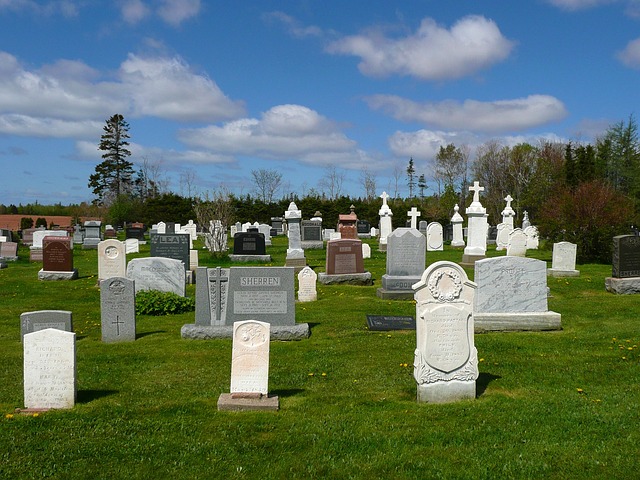
Gravestones hold powerful clues for genealogical research, offering insights into your ancestors’ lives. Learn how to use these sources effectively, validate their information, and uncover deeper stories to bring your family history to life. Start your journey with gravestones as a gateway to discovery!
Whispers in the Hallway: A True Haunted House Story
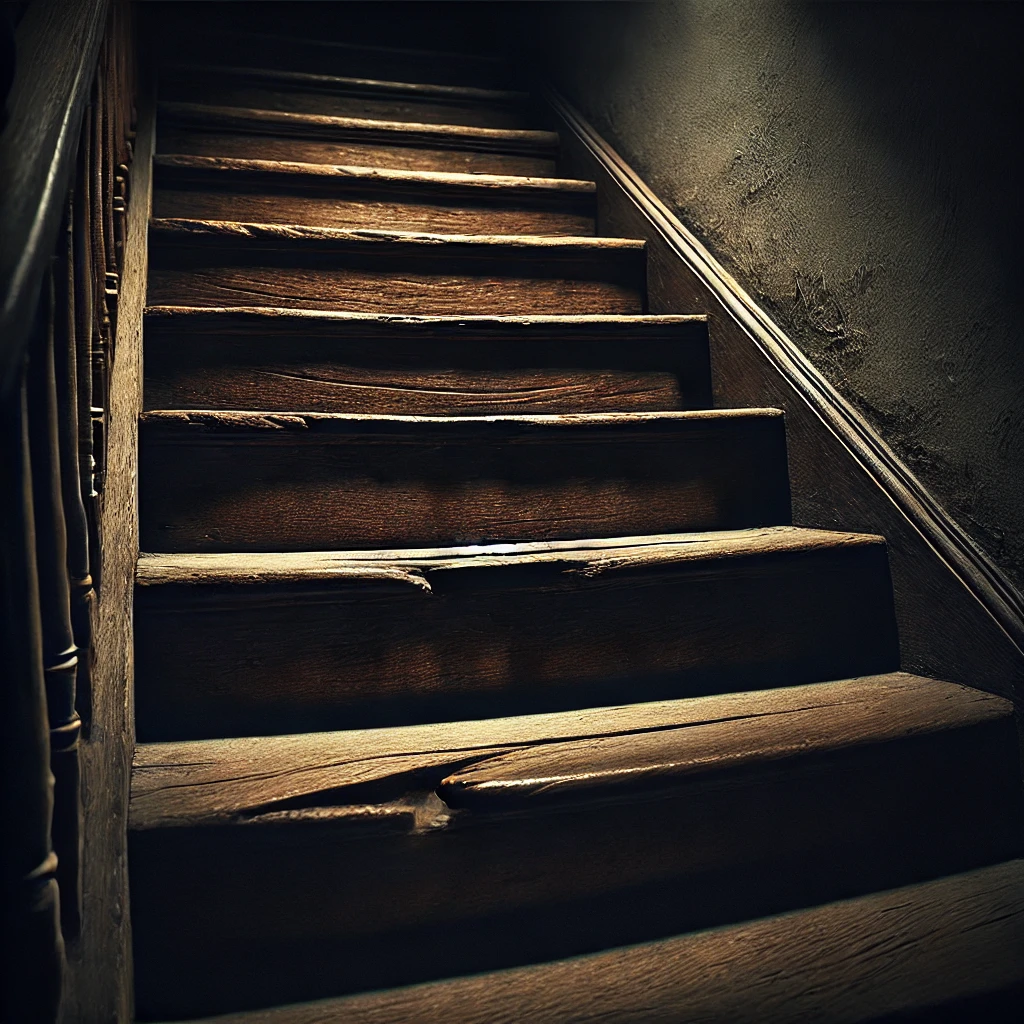
Whispers in the Hallway: A True Haunted House Story It wasn’t something I thought about then, but it dawned on me much later: I grew up in a haunted house. The split-level home in Exton, Pennsylvania, appeared ordinary enough, nestled on a quiet street in a neighborhood called Marchwood. But appearances can be deceiving. This is the beginning of my haunted house story. My father purchased the house from Mario and Dorothy Casavecchia on August 7, 1975, for about $39,000. I was only two years old then, far too young to sense what lingered in the shadows of our home. But strange things began to happen, subtle at first but growing more persistent as the years passed in my haunted house story. When I was around seven, I noticed my mother’s odd behavior during the night. She would leave the master bedroom she shared with my father and hurriedly walked down the short hallway to the bathroom at the end, passing the built-in closet along the way. This ritual always struck me as peculiar, especially since the master bedroom had its own attached bathroom. I could only assume it was because my father claimed that space for himself—it had only a shower, not a bathtub like the other bathroom. But what unsettled me was the way she moved in the dark. She’d walk briskly, almost as if trying to escape something unseen in the hallway behind her. By the time I turned eleven, I had followed the same pattern. I would wake in the dead of night with an urgent need to use the bathroom. I’d flip on the light, complete my task, and then—without thinking—I’d bolt back to my bedroom, the hallway suddenly oppressive with an invisible presence. I never felt it wasn’t very hospitable, but it was there, watching. Waiting. This was becoming a central piece of my haunted house story. Around this time, I began noticing other peculiar occurrences in the house. My bedroom shared a wall with the stairs, and I often woke up to creaking footsteps in the middle of the night. The stairs groaned under the weight of someone—or something—moving up and down, up and down. But the steps would stop at the top of the stairs, and no one ever appeared. I would lie in bed, straining to hear more, wondering who could be wandering the house at 1 a.m. But the living room remained dark, the dining room silent, and no footsteps ever moved into the kitchen. One night, my curiosity got the better of me. I slipped out of bed and peeked down the hallway, expecting to see someone at the bottom of the stairs, but only darkness greeted me. My mother didn’t believe in nightlights back then, so the house felt swallowed by shadows. I stood there for a moment, listening. The silence was thick, and then the footsteps returned—slow, deliberate—on the stairs behind me. Heart pounding, I darted back to bed, convinced that something unseen lurked beyond the veil of darkness. This was another element of our haunted house story. But the strangest incident occurred one night after I had returned from the bathroom. Lying awake in the darkness, I heard the unmistakable sound of the closet door in the rec room downstairs clicking shut. My heart skipped a beat. Who could be in the closet at this hour? It was well past midnight, and my parents had long since gone to bed, their nightly routines always ending after Johnny Carson’s monologue. Then, I heard something even more unnerving—the faint scraping of cardboard boxes being dragged out of the closet and stacked, one by one. I sat up, fear prickling at the edges of my mind. Was someone—or something—moving around in the dark downstairs? I had to know. I got out of bed, crept down the hallway, and flicked on the bathroom light. Walking over to the cast iron railing, I expected to see my mother or father sorting through the boxes of seasonal decorations stored under the stairs. But there was nothing—only the eerie emptiness of the rec room below swallowed in darkness. Shaken, I retreated to my room, shutting off the light and hurrying back to bed. The hallway seemed to breathe with a life of its own, and the feeling of being watched intensified. The next morning, I tried to make sense of it all. As my mother sat in the living room sipping her coffee, I asked if she or Dad had been downstairs the previous night, moving boxes. She blinked at me, her brow furrowing in confusion. “No, why would I be in the closet? I haven’t touched those boxes in months.” I insisted that I had heard the noises—boxes shifting, the closet door opening and closing—but she just shrugged, her face tight with uncertainty. A few days later, I noticed she started leaving the lamp on in the living room as a nightlight. My Haunted House Story Gets Real Fast forward to the night of my high school graduation in June 1991. My Aunt Marilyn had come into town to celebrate, sleeping on the couch in the living room since our house didn’t have a guest room. The following day, she greeted me with a question that chilled me to the bone. “Kimmie Ann, why were you sleeping in the hallway last night?” she asked, her voice puzzled. I stared at her, baffled. “What? I wasn’t sleeping in the hallway. I didn’t even get home until after 1 a.m.” She frowned, clearly unsettled. “But I saw you. I got up to use the bathroom around midnight, and you were lying in the hallway under a blanket.” A cold shiver ran down my spine. I hadn’t been home. I glanced over at my mother, who was standing nearby, her face pale and eyes wide with a secret she had long kept hidden. “What is it?” I asked, dread pooling in my stomach. “Well,” she began slowly, “when we bought the house, the realtor