
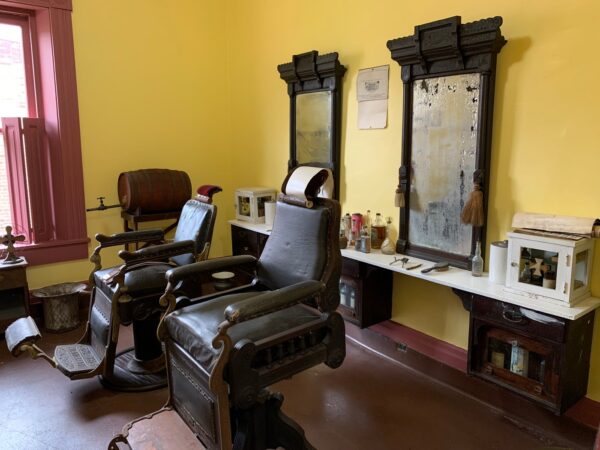
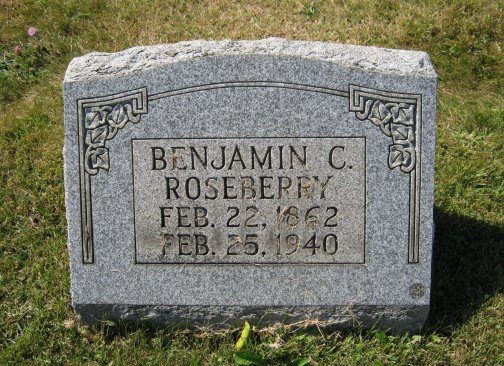
Some people disappear from history quietly, like Benjamin Roseberry.
A late-night investigation inside the Greene County Historical Society unexpectedly brought one of those people back into memory.
The story of Benjamin Roseberry is one that deserves to be told.
The Legacy of Benjamin Roseberry
On the night of Aug. 16, 2025, members of Steel City Ghost Hunters and I were sitting in the doctor’s office across from the barber shop on the second floor of the Greene County Historical Society. We were laughing about the television show Resident Alien when the tripwire in the hallway suddenly lit up.
Joking that perhaps someone nearby enjoyed the same shows, Kim from Steel City turned on her vox device and began asking questions. A voice came through clearly: “Ben.”
When we responded and asked for clarification, the voice answered again: “Benson.”
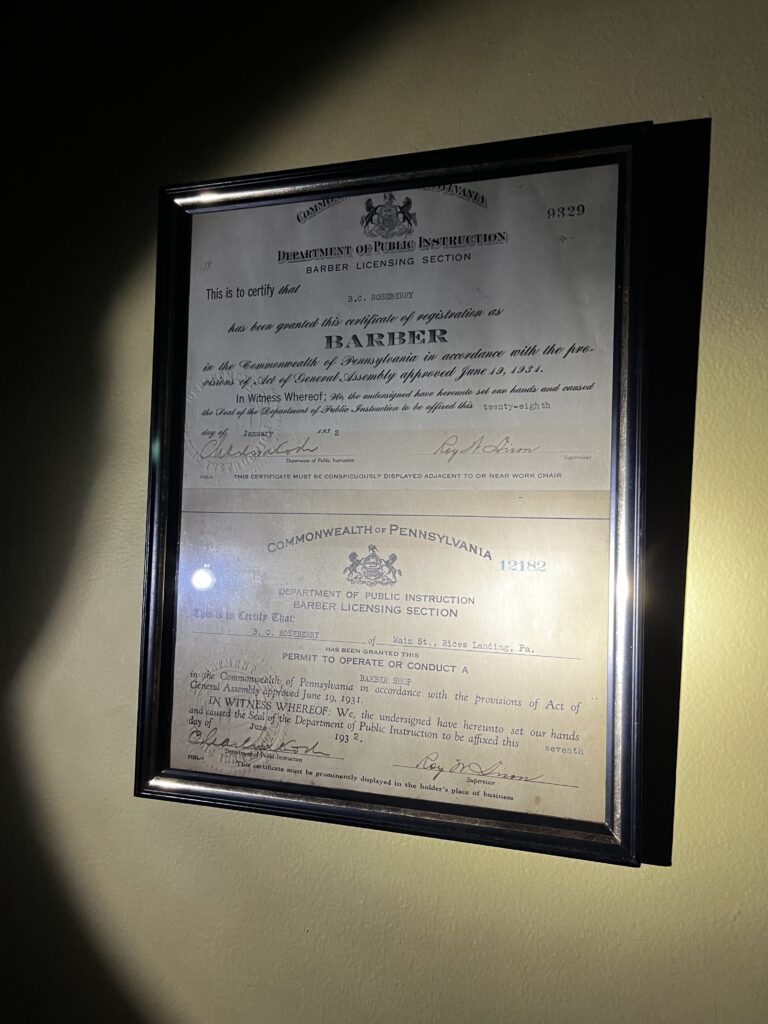
Moments later, the cat balls inside the barber shop lit up. Kim decided to stop the session and asked us to walk around and look for the name Benson on any of the portraits hanging on the upper floor in that wing. We did not find anything until we went into the barber shop and noticed the barber’s licenses hanging on the wall. The one license was for B. C. Roseberry. Ashley, another member of Steel City, quickly googled the name Benson Roseberry, and it returned Ben Roseberry, Barber of Rice’s Landing, PA. This is where our story begins.
Rice’s Landing is a small, rural river town nestled on the western bank of the Monongahela River, approximately 50 miles (80 km) south of Pittsburgh. Fueled by valuable resources such as coal, clay, and timber and benefiting from river transportation, the town became a boomtown. Shops, taverns, and trading posts once filled its streets, earning it the reputation among frontier settlers as the “Gateway to Western Pennsylvania.” (Wikipedia, 2026)
To learn more about Benson Roseberry of Rice’s Landing, I started with the 1930 census records. What I found changed what I thought we had discovered that night at the museum. The record revealed that 68-year-old Benjamin Roseberry (b. 1862), a barber, lived on Main Street with his wife, Aura, age 56, and son, Purl, age 36. It states on the record that he owns his barber shop.
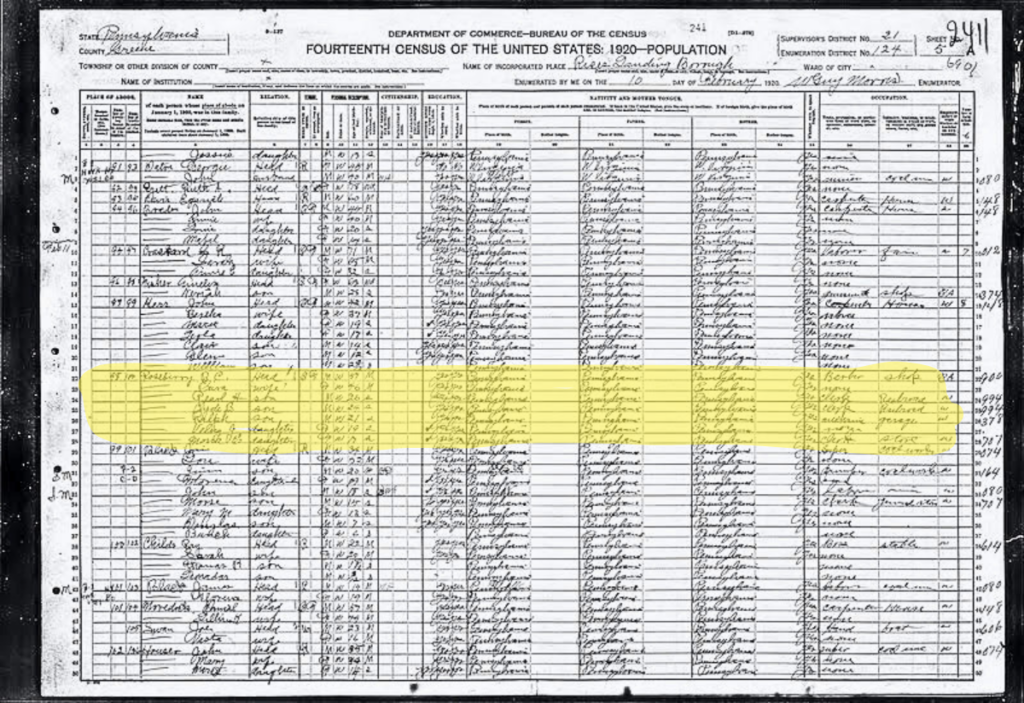
However, looking back at the 1920 Census, we find that he is using the initials B.C. instead of Benjamin. I know I have the right person because his wife and son match the 1930 record. Now the question becomes, what is the “C” in his name?
Through years of research, I have found that many times middle initials, and sometimes first names, are linked to the mother’s maiden name. In this case, it appears that indeed Benjamin carried the family name Craft, his mother’s maiden name. According to Find A Grave, his father was Elijah Michael Roseberry, and his mother was Harriet Jane Craft Roseberry.
Now that I know that his name is not Benson, but Benjamin, it was time to learn more about Barbers and Rice’s Landing. Why? Because I was curious, this particular place still seemed connected to him.
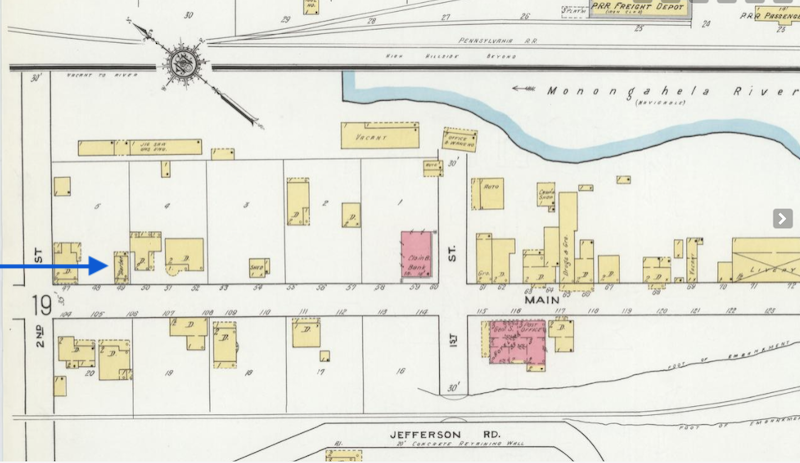
Pulling the 1925 Sanborn Fire Insurance maps (see above), I found Benjamin’s barber shop standing along Main Street. This can also be confirmed by the census, which shows Benjamin Roseberry and his family live on Main Street. I would surmise that he lived above the shop.
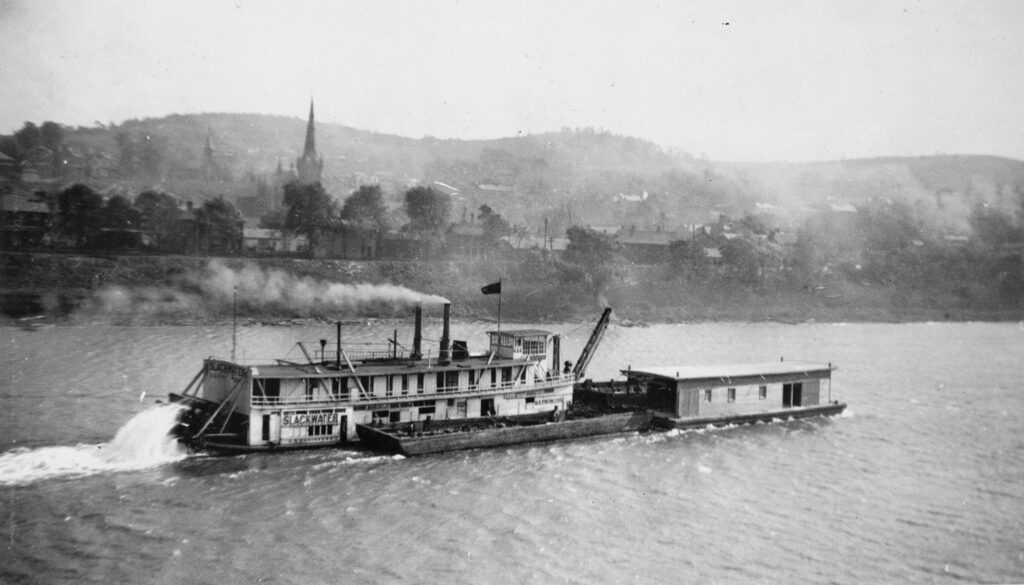
I am not sure what year Benjamin opened his Barber shop. Census records indicate that he was a barber in 1910. From 1899 to 1901, or possibly later, he held a civil service job on the “Slackwater,” a repair boat. Rice’s Landing was home to Lock and Dam No. 6 on the Monongahela River navigation system. As a civil service employee on the Slackwater repair boat, Benjamin Roseberry would routinely dock at Rice’s Landing to perform heavy maintenance on Lock 6. (Slackwater, 2026) This information lines up with the 1900 census; he was a skilled laborer.
One detail continued drawing my attention: the aging barber’s license still hanging on the wall inside the museum shop. When did he get his license? A quick web search found the following information.
“Pennsylvania began formally issuing barber licenses following the passage of the Barbers’ License Law on June 19, 1931. The 1931 act was established to promote public health and safety, regulating barber schools, shops, and the profession through examination and licensure.”
Barber shops in small towns and rural areas served as informal meeting places where men gathered to talk about local news, politics, farming, and personal matters. In many rural counties, men’s conversations often centered on agriculture, road conditions, government policies, and regional developments. These spaces fostered a sense of belonging and enabled the exchange of information vital to isolated communities. It is easy to imagine Benjamin Roseberry spending much of his life inside the barber shop, visiting with friends and serving as part of the community’s daily rhythm. Rice’s Landing never had a population of more than 1,000 people. It was a very small community.
Whether the voice that answered us that evening truly belonged to Benjamin Roseberry is impossible to know. What remains undeniable, however, is that for a brief moment inside an old barber shop in Greene County, a man nearly forgotten by history was remembered again.
Sources
- Library of Congress. Sanborn Fire Insurance Map from Waynesburg, Greene County, Pennsylvania. Sanborn Map Company, September 1925. Accessed May 13, 2026. https://www.loc.gov/item/sanborn08031_007/
- Slackwater. University of Wisconsin Digital Collections. Accessed May 13, 2026. https://digital.library.wisc.edu/1711.dl/3TO7TOICF6CYI8U
- Tinker, Steve, Clio Admin, and Kathleen Thompson. “Greene County Historical Society and Museum.” Clio: Your Guide to History. August 24, 2022. Accessed May 13, 2026.
- Wikipedia contributors. “Rices Landing, Pennsylvania.” In Wikipedia, The Free Encyclopedia. Last modified April 22, 2026. Accessed May 8, 2026.
Many thanks to Greene County Historical Society and Steel City Ghost Hunters for their accommodation and help in the investigation.